Origins
The Brotherhood of Steel was founded by Roger Maxson, a captain in the United States Army. Led by Colonel Robert Spindel, Maxson was part of a team sent onJanuary 3, 2076 to monitor progress at a West-Tek facility in California, which was conducting research on behalf of the American government. On January 7, 2077, all West-Tek research and personnel – Maxson and his team included – were relocated to the newly constructed Mariposa Military Base in an effort to enhance security.
On October 10, 2077, Captain Maxson and his men discovered, to their horror, that the West-Tek scientists at Mariposa were using military prisoners as unwilling test subjects for their genetically engineered Forced Evolutionary Virus (F.E.V.). Morale in the base quickly collapsed and Colonel Spindel suffered a mental breakdown, eventually committing suicide five days later. In the midst of the crisis, Maxson's men turned to him for leadership. Captain Maxson proceeded to interrogate Robert Anderson, the chief scientist of the West-Tek research team stationed at Mariposa, learning the extent of their experiments. Anderson, along with most of his research team, were subsequently executed for their crimes.
Maxson, now in control of the base, declared his desertion from the United States Army via radio on October 20. To his confusion, he received no response from the chain-of-command, as the U.S. Army was currently focused on escalating conflicts with the Chinese. Three days later on October 23, both nations launched their entire nuclear arsenals. Within two hours, the Great War had ended and much of the Earth was reduced to a radioactive wasteland. The Mariposa Military Base survived the onslaught, its numerous safety protocols protecting the soldiers within from the radiation and the F.E.V., which had been accidentally released and was now seeping into the newborn Wasteland. Two days after the attack, on October 25, Captain Maxson sent one of his men, Platner, outside in protective power armor to scout the area and gather readings on the atmosphere. Platner reported no significant amounts of radiation in the surrounding area.
After burying the bodies of Anderson and his executed staff members, Captain Maxson and his men raided the base for various supplies and weapons schematics before sealing Mariposa and venturing off into the desert, eventually managing to regroup with surviving members, including Maxson's own wife and teenage son. The following weeks of travel inflicted casualties on the party at the hands of various raider gangs and the harsh conditions of the Wasteland. In November 2077, Captain Maxson eventually led his band of survivors to the safety of Lost Hills, a government fallout shelter. This journey came to be immortalized in Brotherhood lore as “the Exodus”.
In time, Captain Maxson set the bunker as the headquarters for his new organization, the Brotherhood of Steel. As the Brotherhood's first High Elder, Maxson sought to use Lost Hills' resources to help rebuild civilization – no matter the cost.
Early Years
Relatively little is known about the early years of the Brotherhood of Steel. In 2134, an emerging faction of the Brotherhood, led by Sergeant Dennis Allen, petitioned the Council of Elders for permission to explore the remnants of theWest-Tek research facility in search of technological artifacts. In the wake of the Great War, the facility was left a highly irradiated ruin referred to by locals as “the Glow”. The Elders thus denied Sergeant Allen's request, prompting him and his followers to splinter from the Brotherhood, taking some advanced weapons and technology with them. Despite this incident, the Brotherhood of Steel continued to grow in strength under the guidance of Elder Maxson, further refining their technology and gradually forming the orders of Knights, Scribes, and Paladins that are known today. That following year, Roger Maxson died of cancer. His son, Maxson II, succeeded him as High Elder.
In the 2150's, the Brotherhood began extending their influence out into the surrounding areas, quickly asserting their place as one of the major powers of New California of the post-War West Coast. The early 50's saw the emergence of a prominent raider group known as the Vipers, who quickly established a base of operations in the badlands to the south of Lost Hills. Driven by a near-religious frenzy, the Vipers' raids become bolder and more frequent over time, eventually attracting the attention of the Brotherhood of Steel.
Rhombus
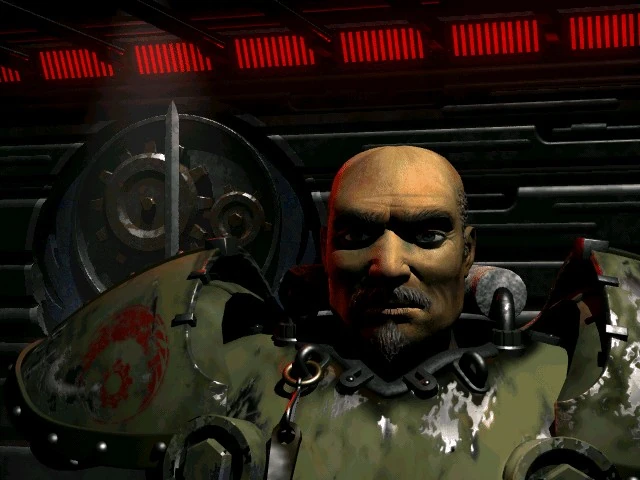
In 2155, the Brotherhood sent a handful of squads out into the Wasteland to track the Vipers down. To the Elders, this seemed a glorified training exercise, as they were convinced that a small detachment of Brotherhood troops in power armor would be sufficient to deal with a band of raiders, no matter how large. One Brotherhood squad, led by High Elder Maxson II himself, located the Vipers. Expecting the raiders to break and run at the sight of such a heavily armed force, Maxson did not take into account the Vipers' zeal and ferocity...or their poisoned weapons. A single arrow nicked the High Elder while he had his helmet off, leading to his death a few hours later. John Maxson, grandson of Roger, took up the role of High Elder.
In the wake of this incident, the newly appointed Head Paladin Rhombus launched a full-scale campaign against the Vipers, hunting them down and driving them to near-extinction over the course of a month. The few remaining Vipers managed to scatter north and east to the Sierra Madre mountain range. It was towards the end of this campaign that the Brotherhood sent a handful of scouts and emissaries to the Hub in order to track down these runaway Vipers. It was from these beginnings that the Hub and the Brotherhood of Steel opened full trade relations. (Caravans had delivered to the Brotherhood in the past, but in the wake of the Vipers' destruction, caravan trains now ran directly from the Hub to the Brotherhood's headquarters at Lost Hills on a regular basis.)
The Super Mutants
Scribe Vree
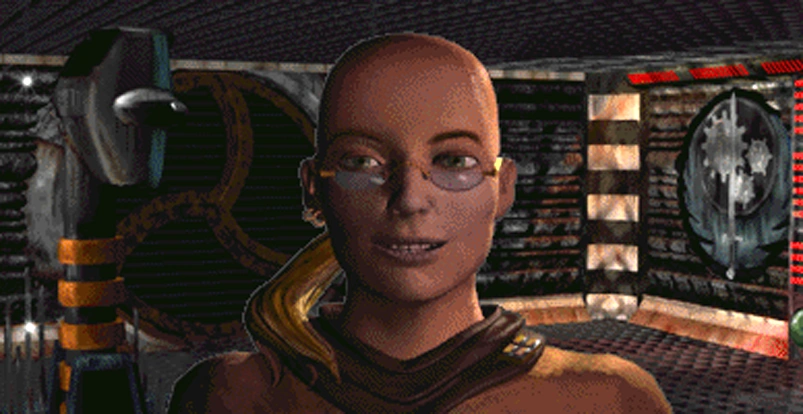
Several years after the Viper campaign, the Brotherhood of Steel encountered an enemy far more formidable than any band of raiders. In October of 2161, a Brotherhood patrol stumbled upon the corpse of a Super Mutant. The remains were transported back to Lost Hills for study by Head Scribe Vree.
In 2162, the Vault-Dweller arrived at the Lost Hills bunker, seeking entry into the Brotherhood. His request was not taken seriously and he was tasked with retrieving the records of Sergeant Dennis Allen's expedition from the hazardous ruins of the Glow, a fool's errand commonly used to deter would-be Brotherhood members. To the Brotherhood's surprise, not only did the Vault-Dweller return from the West-Tek facility alive, but he had also succeeded in his fool's errand and recovered a holodisk recording of Allen's doomed expedition. As a result, the Vault-Dweller became the first outsider in decades to be accepted into the Brotherhood of Steel, despite the protests of a few members.
It was from the Vault-Dweller that the Brotherhood subsequently learned of the Master's mutant army and its plans to forcibly convert the surviving human population into Super Mutants. With the support of High Elder John Maxson, the Vault-Dweller was able to convince the Council of Elders to deploy a squad of Paladins to Mariposa, where the Master's F.E.V. vats were located. With the assistance of the Brotherhood, the Vault-Dweller managed to defeat the Master and disrupt his mutant army. The Brotherhood of Steel also helps drive mutants away from other human outposts.[1] At this point in time, the Brotherhood of Steel stood as the most technologically advanced faction in New California. Although the remaining Super Mutants and the nascent Gun Runners had access to comparably advanced weaponry, the Brotherhood had a monopoly on power armor, supercomputers, and advanced medical technologies, such as cybernetics. With this technology slowly being introduced into New California, the Brotherhood of Steel became a major research and development house.[1]
Aftermath
In the wake of the Master's defeat, the Brotherhood of Steel began arguing amongst itself over the need for new recruits versus their secrecy as an organization. In the end, most of the Elders ruled against the sharing of their technology with outsiders, confident that their organization could survive on their traditional principles. The minority who opposed this ruling were sent eastward to track down the last remnants of the Master's army via a small fleet of airships. When these airships crash-landed near the ruins of Chicago, these surviving individuals founded the Midwestern chapter of the Brotherhood. In the following years, the Brotherhood continued to expand somewhat, establishing small outposts throughout California, as well as launching expeditions to regions such as Washington, D.C., and the Mojave.
In addition, the end of the Master was accompanied by the birth of the New California Republic (NCR). What began in the small farming community of Shady Sands quickly blossomed into a spirited effort to reclaim what was lost in the Great War. As the young NCR expanded, the Lost Hills region was incorporated into the growing nation in the form of the newly founded state of Maxson. While the bunker itself still remained under the control of the Brotherhood, the NCR held jurisdiction over the lands outside. Though tensions simmered between the two factions, peaceful relations remained.
The Enclave
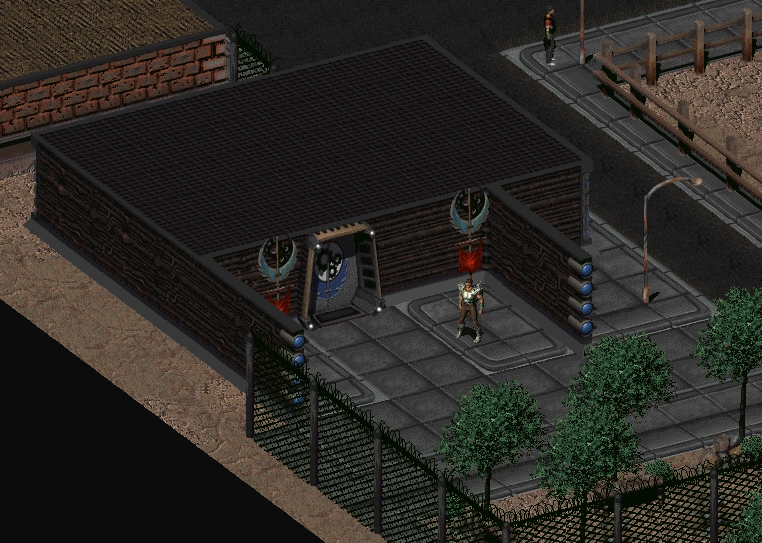
At the San Francisco outpost, Matt assigns an important task to the Chosen One.
By 2242, the Brotherhood of Steel were but a fraction of the power they had been once before. With the emergence of the Enclave, the Brotherhood found that they were no longer the most advanced faction in the Wasteland. Intimidated and lacking the resources to deal with this new foe, the best the Brotherhood could manage was just to keep an eye on the newcomers. To this end, several previously-dormant bunkers and outposts in areas of Enclave activity were reactivated.
Eventually, the Brotherhood learned of the Enclave's Vertibird technology. Lacking any similar technology of their own, the Brotherhood saw itself as vulnerable to a possible Enclave invasion. In light of this possibility, Matthew, an operative stationed in the San Francisco outpost, was requested to enlist the aid of the Chosen One to steal a set of Vertibird schematics from a major Enclave outpost at Navarro.
Although the Chosen One was successful in his mission, it is unknown if the Vertibird plans ever reached the High Council, as Operative Matthew was killed by Agent Frank Horrigan a short time after the mission's completion. However, with the destruction of their oil rig base and NCR forces subsequently hunting down remaining members, the Enclave ceased to pose a threat on the West Coast.
War with the NCR
Main article: NCR-Brotherhood War
 | The following is based on Van Buren and has not been confirmed by canon sources. |
|---|
By 2231, Jeremy Maxson had assumed the position of High Elder. Vocal in his ideas of pushing Brotherhood operations eastward, Maxson was also notably aggressive in his “hoarding” of pre-War technology. The High Elder sought to restore the Brotherhood of Steel to power by wresting any and all advanced technology from the hands of “lesser people” by any means necessary. Naturally, this led to disputes with the New California Republic, which had always been in favor of utilizing advanced technology for the benefit of society. Not long after the destruction of the Enclave, conflict erupted between the Brotherhood and the NCR.
Role in The Commonwealth
When The Sole Survivor awakens from their cryo sleep the Brotherhood is preparing to launch a strike against The Institute. Believing that they are not worthy of such levels of technology. The Insitute replacing Breathing, living human beings with machines of gears and metal goes against each and everything of which the Brotherhood of Steel believe in. The Brotherhood of Steel is encountered the first time in Cambridge Policestation. Their scouting team is being sieged by Large amounts of Ghouls. Afterward the player character helps the Brotherhood and assist them in getting a signal to the rest of the invasion forces a large scale invasion begins.
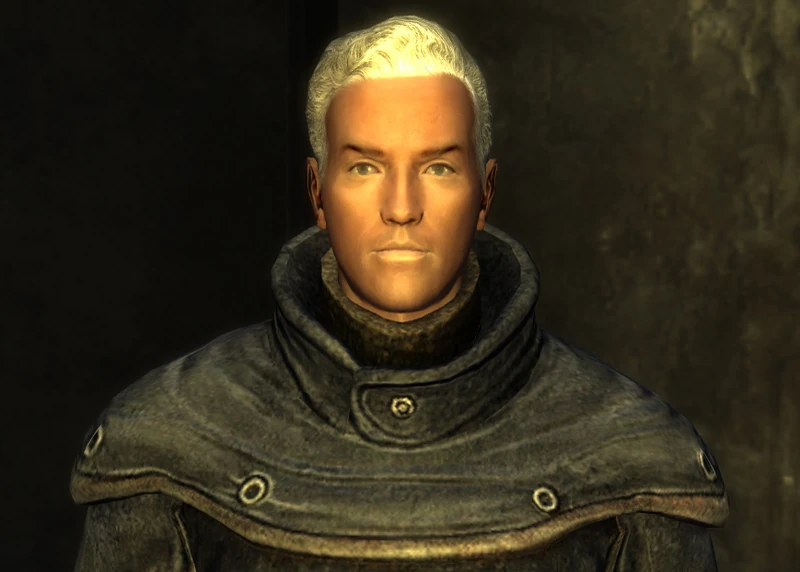
Elder McNamara in 2281.
With their superior technology, the Brotherhood managed to hold out against the NCR, even coming close to achieving total victory. However, the Brotherhood's technological advantage was gradually outmatched by the sheer size of the NCR military; no matter how many troops the NCR lost, they always seemed to have more. Meanwhile, the Brotherhood, a selective and isolationist group, lacked sorely in numbers. This discrepancy in troop numbers spelled imminent defeat for the Brotherhood.
| End of information based on Van Buren. |
|---|
The Mojave chapter of the Brotherhood would still be fighting the NCR as late as 2274. After establishing a base at theHELIOS One solar plant, the Mojave Brotherhood soon found itself at odds with the NCR and its growing power in the region. Eventually, the NCR sought to control HELIOS One and the Brotherhood, under orders from their Elder, refused to leave. This led to a confrontation between the two and, in typical fashion, the Brotherhood's superior technology was no match for the NCR's superior numbers, eventually losing in one of the bloodiest battles in the organization's history. With over half the chapter dead, the Mojave Brotherhood retreated to Hidden Valley, where Paladin McNamara, in light of the disappearance of Elder Elijah following the battle, took the role of Elder upon himself and placed the complex under lockdown. Since then, the Brotherhood's presence in the Mojave Wasteland has been restricted to only a few scouting missions, a point of major controversy within the chapter.
Society
The Brotherhood of Steel is a neo-knightly order that rose from the ashes of the United States military in the years following the Great War of 2077. The organization's tenets include the eradication of mutants and the veneration of technology. In recent decades, the Brotherhood has become quite reluctant in regards to sharing advanced technology with their fellow Wastelanders, whom they generally consider too ignorant and irresponsible to deserve such technology. The Brotherhood has been known to trade their technology with frontier communities and the NCR, but more often than not, they prefer to keep the more advanced material to themselves.
Ideology
Although the Brotherhood has always been portrayed as aloof, as time went on more negative aspects of their beliefs have been increasingly emphasized as their power has decreased. Originally they stood for relatively benign goals of preservation. Indeed, in one of the possible endings in Fallout; they voluntarily reintroduce technology, engage in novel research, and actively assist those inhabiting the wasteland. Later, in Fallout Tactics, the Midwestern faction eventually would go on to become a near-fascist state, but only if a specific ending is chosen in which this faction assumes the new leadership of a prejudiced General Barnaky. A different ending involves the Midwestern Brotherhood working together with the humans and non-humans of the Midwestern wasteland for the greater good, and create a post-apocalyptic utopia (however, it should be noted that none of the endings of Fallout Tactics has yet been assumed as canon, and so is open to speculation). By the time of Van Buren/New Vegas the main Brotherhood is strongly paranoid, it not only seeks to preserve technology, but actively remove it from outsiders, is disinterested in nonmilitary assets, and engages in little if any work to actually improve their tech. Much of the Brotherhood's belief system is enshrined in a document known as the Codex, which acts as an important source of information on regulations and rules that members must adhere to. The East Coast Brotherhood is different from the West Coast, seeming to want to help others instead of collect vital technology, but this created a faction focused entirely on collecting tech in the east, the Brotherhood of Steel Outcasts. The Brotherhood does also hold a religious side, with some or all members believing in a deity known as the "Creator", and often praying to the Creator, on occasions such as meals. [2]
Symbolism of the insignia

Brotherhood of Steel insignia
In the Brotherhood symbol, the gears represent their engineering knowledge, the sword is their will to defend themselves, the wings represent the uplifting hope that the acquisition of lost technology represents for mankind's salvation following the devastation of the Great War, and the circle represents the fraternal unity that makes the organization a true brotherhood.[3]
Another interpretation is that the Brotherhood's symbol represents each of the organizations different orders. The sword represents the Paladins, the wings represent the Elders (the "wings" control the movement of the sword), the large gear represents the Knights, and the two smaller gears represent the Scribes and the Initiates, whose services keep the Knights supplied with the information and the manpower required to get their jobs done.[4] This interpretation could also be supported by looking at the Outcast's insignia, which is absent of wings & shows that they do not need Elders or their equivalents.
 | The following is based on Fallout Tactics and some details might contradict canon. |
|---|
While both the original Brotherhood of Steel in New California and the Capital Wasteland faction of the Brotherhood use different colors for different elements of the symbol (blue for the wings, gray for the sword and black for the gears), the Midwestern Brotherhood uses several mono color variations. A blue version is used by the Midwestern Brotherhood's Knights and Paladins, a black one by the Scribes and an orange one by the Elders. The golden/yellow variant seems to symbolize the Midwestern Brotherhood as a whole. The Midwestern version of the Brotherhood symbol is also reversed horizontally - the large gear is to the right of the smaller ones, not to the left as in the original.